

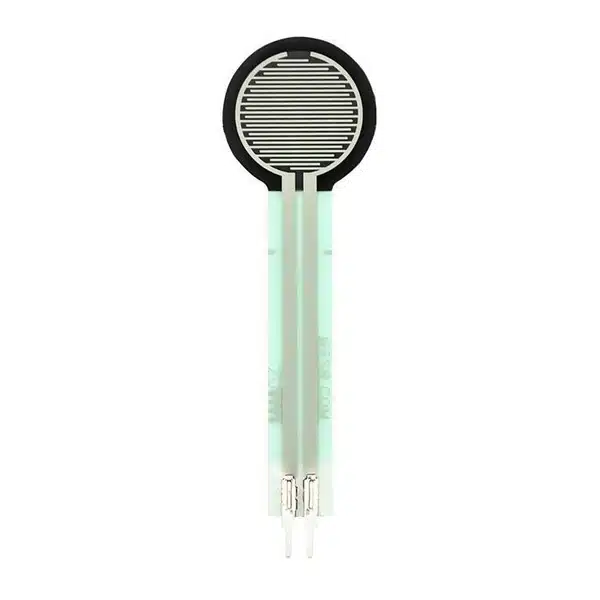
Force Sensitive Resistor 12.7mm Pressure Sensor (FSR402)
₵55.00
The Force Sensitive Resistor 12.7mm (FSR402) detects touch and applied pressure through changes in electrical resistance. Its thin, flexible design and two-pin connection make it ideal for Arduino, ESP32, robotics, pressure-sensitive buttons and interactive electronics projects.
10 in stock
The Force Sensitive Resistor 12.7mm (FSR402) is a thin-film pressure sensor designed to detect physical touch, squeezing and changes in applied force.
Unlike conventional switches that simply turn ON or OFF, the FSR402 changes its electrical resistance depending on how much force is applied to its circular sensing surface.
Its lightweight, flexible construction makes it suitable for Arduino and ESP32 projects, robotics, pressure-sensitive controls, interactive devices and STEM education.
Key Features
- Pressure-Sensitive Resistance: Resistance decreases as applied force increases.
- 12.7mm Sensing Area: Circular detection surface for sensing touch and applied force.
- Thin-Film Construction: Lightweight, flexible design for compact electronic projects.
- Two-Pin Connection: Simple, non-polarised electrical interface.
- Analogue Force Detection: Works with a voltage-divider circuit to produce a measurable analogue signal.
- Microcontroller Compatible: Suitable for Arduino, ESP32 and other controllers with analogue inputs.
- No Moving Parts: Detects applied force through changes in its resistive sensing material.
- Compact Design: Suitable for embedded controls, robotics and interactive applications.
Technical Specifications
| Specification | Details |
|---|---|
| Model | FSR402 |
| Product Type | Force Sensitive Resistor |
| Sensor Technology | Resistive Thin Film |
| Sensing Method | Applied Force / Pressure |
| Active Sensing Diameter | 12.7mm |
| Overall Length | Approximately 60mm |
| Overall Width | Approximately 19mm |
| Electrical Terminals | 2 |
| Output Characteristic | Variable Resistance |
| Resistance Behaviour | Decreases with Applied Force |
| Polarity | Non-Polarised |
| External Circuit | Voltage Divider Recommended |
| Compatible Controllers | Arduino, ESP32 and Other ADC-Based Controllers |
| Colour | Black Sensing Head with Flexible Tail |
Applications
1. Arduino Pressure Detection Projects
Use the FSR402 to detect when a person presses a surface or applies force to an electronic device.
Connect the sensor to an Arduino Uno R3 Development Board through a voltage-divider circuit to read changing pressure levels.
2. Robotics and Gripper Feedback
Install the sensor on a suitable robotic gripping surface to detect when an object is being held.
The changing resistance can provide feedback for controlling gripping force in experimental robotics systems.
3. Pressure-Sensitive Buttons
Create electronic buttons that respond to how firmly they are pressed rather than simply detecting contact.
This is useful for interactive control panels, custom input devices and educational prototypes.
4. Smart Seating and Contact Detection
Develop experimental systems that detect pressure applied to a chair, cushion or contact surface.
5. Interactive Electronics and Gaming
Build pressure-sensitive controllers, musical instruments, interactive toys and electronic installations.
6. STEM and Engineering Education
Demonstrate variable resistance, analogue sensing, voltage-divider circuits and microcontroller programming.
How the Force Sensitive Resistor 12.7mm Works
The FSR402 contains pressure-sensitive conductive material whose electrical resistance changes when force is applied.
Its behaviour can be summarised as follows:
- No Pressure: Very high resistance.
- Light Pressure: Resistance begins to decrease.
- Greater Pressure: Resistance decreases further.
This makes it possible to detect relative changes in applied force.
The relationship between force and resistance is nonlinear. The sensor is therefore particularly useful for detecting touch and estimating relative pressure, rather than obtaining highly accurate weight measurements.
Connecting the FSR402 to Arduino Uno
The sensor is a passive, two-terminal component. It requires an external resistor to convert its changing resistance into an analogue voltage that an Arduino can measure.
A common starting circuit uses a 10kΩ resistor.
| Connection | Arduino Uno |
|---|---|
| FSR Terminal 1 | 5V |
| FSR Terminal 2 | A0 |
| 10kΩ Resistor | Between A0 and GND |
With this arrangement, the analogue voltage at A0 generally increases as greater force is applied.
For the voltage-divider circuit, DIYGH stocks 1/4W Carbon Film Resistors in selectable resistance values.
The circuit can be assembled using a Solderless Breadboard MB-102 and suitable Jumper Wires.
The sensor itself does not require a separate power supply. The 5V connection is used to excite the voltage-divider circuit.
For ESP32 projects, use a suitable 3.3V analogue sensing circuit and an ADC-compatible GPIO.
Force Sensitive Resistor vs Load Cell
Both devices can respond to applied mechanical force, but they serve different measurement requirements.
Force Sensitive Resistor (FSR402)
Best suited for detecting contact, relative pressure changes and approximate applied force in interactive electronics.
Load Cell
Better suited for applications requiring calibrated force or weight measurements, such as electronic weighing scales.
The FSR402 is not a direct replacement for a precision load cell.
Installation Guidelines
- Identify the circular pressure-sensitive area.
- Connect the two terminals to the required sensing circuit.
- Position the sensing head on a suitable supporting surface.
- Apply force evenly to the circular sensing area.
- Observe the analogue readings using the microcontroller.
- Adjust the detection threshold or calibrate the system for the intended application.
Important Usage Information
- Apply force primarily to the circular sensing surface.
- Avoid folding or sharply bending the flexible sensor tail.
- Do not puncture the sensing surface.
- Avoid excessive mechanical loading that could damage the sensor.
- Use suitable low-voltage measuring circuits.
- Do not connect the sensor directly across a power supply without appropriate current limiting.
- Keep the sensing element away from moisture and damaging chemicals.
- Avoid excessive soldering heat near the flexible sensing material.
- Calibrate the response when consistent force thresholds are required.
- The sensor is not recommended for precision weighing or safety-critical force measurement.
Package Includes
- 1 x FSR402 Force Sensitive Resistor Pressure Sensor
Microcontroller, resistors, breadboard and connection wires are not included.
Available from DIYGH Tech Hub, Apatrapa Junction, Kumasi, Ghana, for robotics, pressure sensing, Arduino projects and STEM education.
Related products

16-in-1 Sensor Module Kit for Arduino, ESP32 & Raspberry Pi
Expand your project possibilities instantly. This value-packed kit contains 16 of the most popular sensors for home automation and robotics. Instead of buying modules individually, get everything you need in one box.
-
Includes: DHT11 Temperature, Relay, Ultrasonic, Motion Sensor, and 12 more!
-
Compatibility: Works perfectly with Arduino Uno, Mega, Nano, and Raspberry Pi.
-
Perfect For: Learning how to read data and control devices.
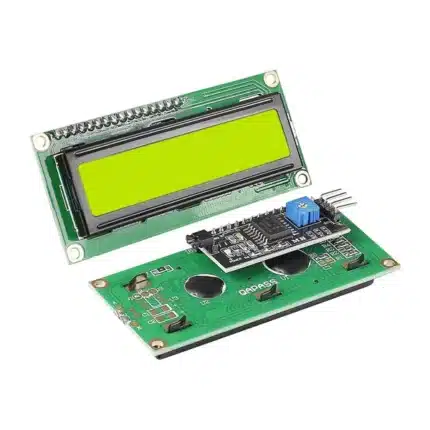
16×2 LCD Display with I2C Interface – Yellow Backlight
A clear, beginner-friendly 16×2 character display with the I2C backpack already soldered. The yellow-green backlight provides excellent readability while the I2C interface reduces wiring to only four connections.
Display: 16 characters × 2 lines
Backlight: Yellow-Green
Interface: I2C (VCC, GND, SDA, SCL)
Voltage: 5V DC
Contrast: Adjustable
Installation: Ready to use – no backpack soldering required
Best For: Arduino, ESP32, Raspberry Pi, IoT and educational projects
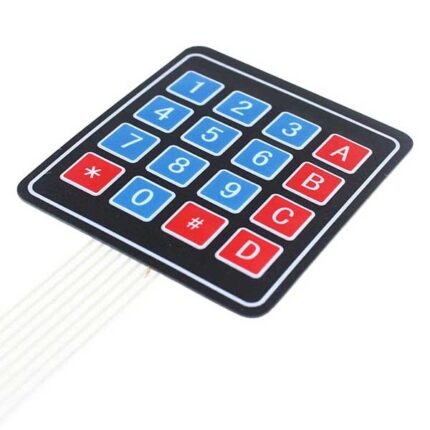
4×4 Matrix Membrane Keypad | 16 Button Keypad Module
The standard keypad for security projects. This ultra-thin 16-button keypad allows users to enter passwords, navigate menus, or control robots. It features a peel-and-stick adhesive backing, making it easy to mount on any plastic project box or door.
-
Keys: 16 (0-9, A-D, *, #)
-
Mounting: Self-Adhesive Backing (Peel & Stick)
-
Interface: 8 Pins (Standard 2.54mm header)
-
Best For: Electronic Door Locks, Calculators, and Attendance Systems.

DS3231 RTC Real-Time Clock Module
The DS3231 is a highly accurate I2C real-time clock (RTC) with an integrated temperature-compensated crystal oscillator (TCXO).
-
Chip: Maxim DS3231 (High Precision)
-
Memory: Built-in AT24C32 32K I2C EEPROM
-
Voltage: 3.3V – 5.5V DC
-
Interface: I2C (SCL, SDA)
-
Battery Backup: Holds time when power is off (Coin cell slot included)
-
Accuracy: Much higher than the standard DS1307

High Sensitivity Vibration Sensor Module (SW-1801P) | Shock & Shake Switch
Detect even the slightest tap. Unlike standard vibration sensors that require a hard shake, the SW-1801P High Sensitivity module can detect light knocks, impacts, and vibrations. Perfect for anti-theft alarms and "Smart Wake-Up" devices.
-
Sensor Type: SW-1801P (High Sensitivity Spring).
-
Output: Digital (High/Low).
-
Adjustable: Blue Potentiometer to set sensitivity trigger.
-
Best For: Anti-Theft Alarms, Earthquake Detection, and Smart Toys.
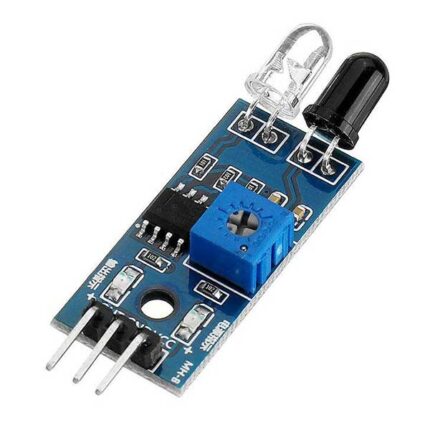
IR Infrared Obstacle Avoidance Sensor Module | FC-51 for Arduino
Teach your robot to see. This sensor emits infrared light and detects reflections to see if an object is in front of it. It is the essential component for building "Obstacle Avoiding Robots" and simple security alarms.
-
Detection Range: 2cm - 30cm (Adjustable).
-
Output: Digital Signal (LOW when obstacle detected).
-
Compatibility: Works directly with Arduino, ESP32, and Raspberry Pi.
-
Best For: Robot Cars, Smart Trash Cans, and Proximity Alarms.

IRF520 MOSFET Driver Module (0-24V) | PWM Motor & LED Controller
The easiest way to drive 12V/24V loads. This breakout board allows your Arduino to control high-voltage devices like LED strips, DC motors, and solenoid valves using the IRF520 MOSFET. It features screw terminals for easy wiring—no soldering required!
-
Max Load: 24V DC / < 5A.
-
Control Voltage: 3.3V or 5V (PWM Compatible).
-
Output: Pulse Width Modulation (Speed/Dimming control).
-
Best For: LED Strips, Small DC Fans, and Solenoids.

Reviews
There are no reviews yet.