
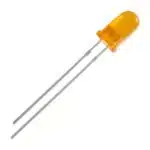
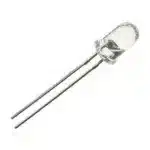
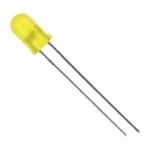
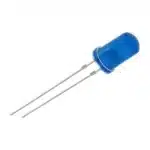
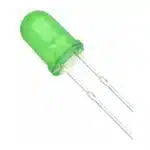
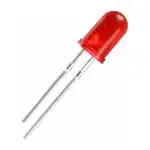
5mm LED Light Emitting Diode – Multiple Colours
₵1.00
The 5mm LED Light Emitting Diode is a compact, energy-efficient electronic component used for visual indicators, Arduino projects, circuit testing, robotics, electronic displays and DIY lighting applications.
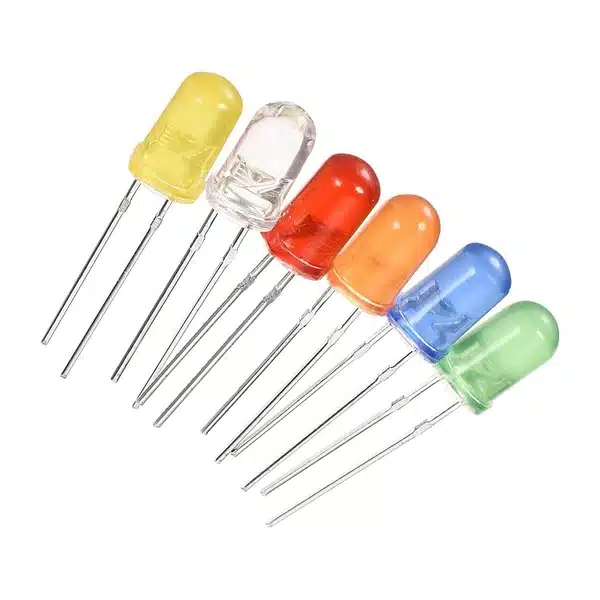
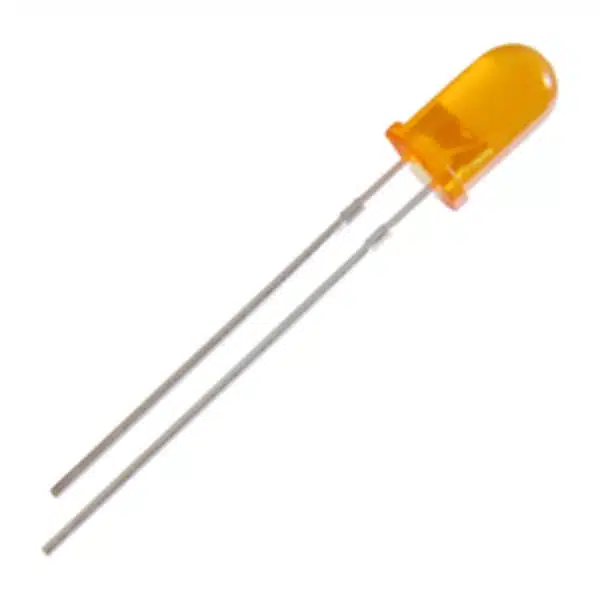
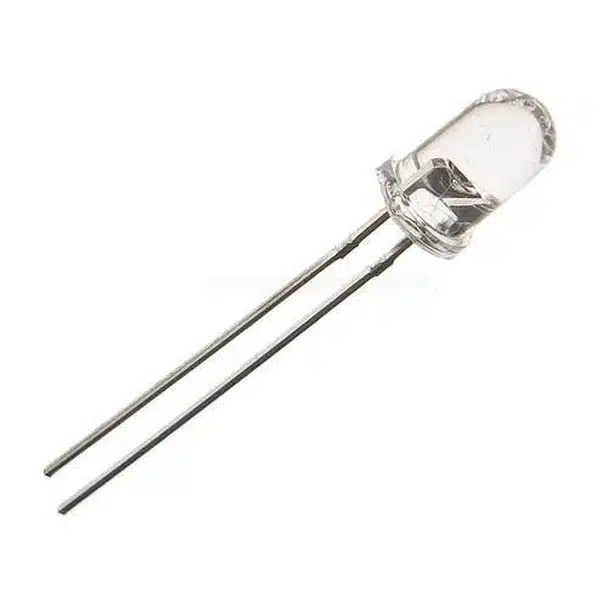
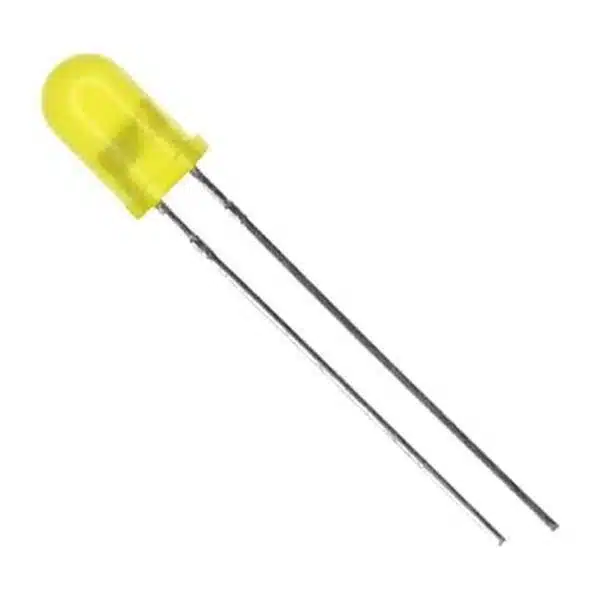
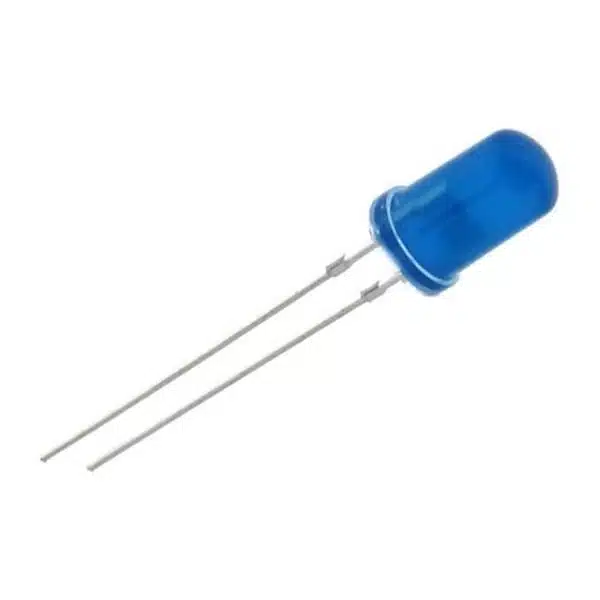
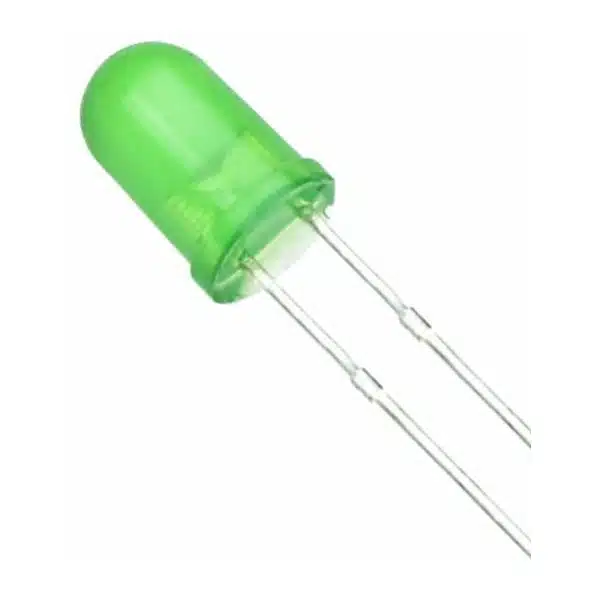
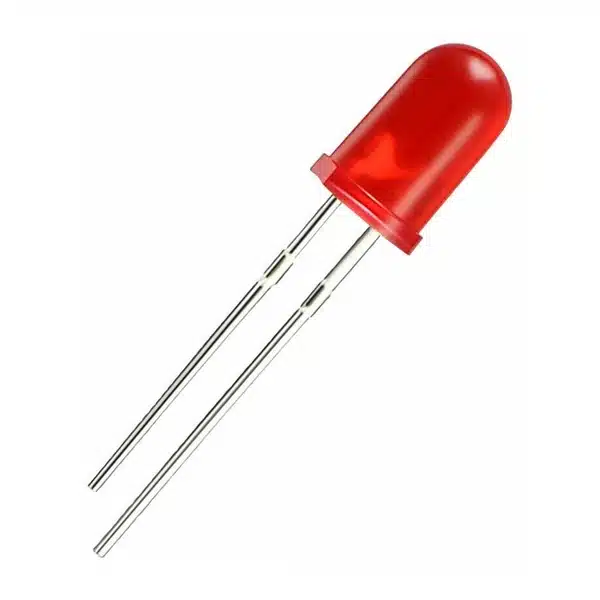
Available in Red, Green, Blue, Yellow, White and Orange, these two-pin through-hole LEDs are ideal for students, electronics hobbyists, STEM facilitators and circuit developers.
Select your preferred colour for your project.
| Colour | Red, Green, Blue, Yellow, White, Orange |
|---|
The 5mm LED Light Emitting Diode is a widely used electronic component that produces visible light when a suitable forward current flows through it. Its compact 5mm round design makes it ideal for electronic circuit indicators, Arduino projects, robotics, STEM experiments and custom lighting applications.
Available in six colours – Red, Green, Blue, Yellow, White and Orange, these LEDs allow electronics enthusiasts to create clear visual signals, display circuit status and add lighting effects to electronic projects.
Unlike incandescent bulbs, LEDs use semiconductor technology to convert electrical energy into light efficiently. Their low power requirements, small size and simple two-pin connections make them essential components for both beginner and advanced electronics applications.
These 5mm LEDs are suitable for use with microcontrollers such as the Arduino Uno R3, ESP32 and other electronic control circuits.
They can be mounted directly on a Solderless Breadboard MB-102 830-Hole for testing or soldered onto a PCB for permanent circuit construction.
Whether you are building a traffic light controller, testing digital outputs, designing a battery indicator or learning basic electronics, these LEDs provide a practical solution for visual signalling.
Available LED Colours and Applications
Red LED
- Power and fault indicators
- Stop signals in traffic light projects
- Alarm and warning circuits
- Battery and charging status indicators
Green LED
- Power ON and normal-operation indicators
- Success and ready-status signals
- Traffic light projects
- System monitoring circuits
Blue LED
- Bluetooth and wireless device indicators
- Decorative electronics projects
- System activity indicators
- Custom electronic lighting
Yellow LED
- Caution and warning indicators
- Traffic light experiments
- Sensor status indication
- Electronics training projects
White LED
- Small electronic lighting projects
- Circuit illumination
- Miniature model lighting
- Portable electronics prototypes
Orange LED
- Warning and attention indicators
- Status display circuits
- Control panel indicators
- Custom electronic signal projects
Each colour is available as an individual selectable product variation.
Key Features
- Standard 5mm round LED design
- Six selectable colours: Red, Green, Blue, Yellow, White and Orange
- Two-pin through-hole construction
- Low power consumption
- Fast ON/OFF switching
- Suitable for digital output indication
- Compatible with Arduino, ESP32 and other electronic circuits
- Easy installation on breadboards and PCBs
- Ideal for STEM practicals and electronics education
- Suitable for visual indicators, signal lights and electronic projects
Technical Specifications
| Parameter | Specification |
|---|---|
| Product Type | Light Emitting Diode (LED) |
| LED Diameter | 5mm |
| LED Shape | Round |
| Number of Pins | 2 |
| Mounting Type | Through-Hole |
| Available Colours | Red, Green, Blue, Yellow, White, Orange |
| Light Output | Single Colour |
| Polarity | Anode (+), Cathode (-) |
| Power Type | Low-Voltage DC |
| Current Limiting | External Resistor Required |
| Breadboard Compatible | Yes |
| PCB Compatible | Yes |
| Product Selection | Individual Colour Variation |
How Does a 5mm LED Work?
A Light Emitting Diode is a semiconductor component that allows electric current to flow in its forward-biased direction while producing visible light.
The LED has two terminals:
- Anode (+): Positive terminal, normally identified by the longer lead.
- Cathode (-): Negative terminal, normally identified by the shorter lead and flat edge of the LED body.
When the LED is correctly connected to a suitable power supply through a current-limiting resistor, current flows through the semiconductor junction and the LED emits light.
The LED’s colour is determined by its semiconductor material.
Connecting a 5mm LED to Arduino
A 5mm LED can be controlled directly from an Arduino digital output pin through an appropriate series resistor.
For a basic Arduino Uno LED experiment:
- Connect the LED anode to an Arduino digital output pin through a 330Ω resistor.
- Connect the LED cathode to Arduino GND.
- Upload a simple LED blink program using the Arduino IDE.
- The LED will turn ON and OFF according to the programmed timing.
For the resistor, DIYGH stocks 1/4W Carbon Film Resistors with selectable resistance values, including 220Ω, 330Ω and 470Ω.
For easy circuit assembly without soldering, use the MB-102 830-Hole Solderless Breadboard.
Applications
- Arduino LED blink projects
- Electronics circuit testing
- Power ON/OFF indication
- Traffic light control systems
- Battery level indicators
- Sensor status displays
- Alarm and warning circuits
- Robotics projects
- Digital electronics experiments
- Decorative electronic lighting
- STEM classroom practicals
- School science and engineering projects
- IoT device status indication
- Prototyping and electronics repairs
LEDs for STEM Education and Arduino Beginners
Light Emitting Diodes are among the first components students encounter when learning electronics and microcontroller programming.
They help demonstrate fundamental electrical and electronic concepts such as:
- Forward and reverse bias
- Current flow in semiconductor devices
- Electrical polarity
- Current-limiting resistors
- Series and parallel circuits
- Digital output control
- Pulse Width Modulation (PWM) for brightness control
Students who want to explore more Arduino circuits can use the Arduino Uno R3 Ultimate Starter Kit, which includes LEDs, resistors, a breadboard, jumper wires and other electronics components for practical learning.
Important Usage Instructions
- Always connect the LED with the correct polarity.
- Use an appropriate current-limiting resistor.
- Do not connect an LED directly across a 5V or 12V power supply without current limiting.
- Do not exceed the safe output-current limits of the controlling microcontroller.
- Use separate resistors for individual LEDs when connecting multiple LEDs in parallel.
- For high-current or multiple-LED projects, use an appropriate transistor or driver circuit.
Why Buy 5mm LEDs from DIYGH?
DIYGH Tech Hub supplies LEDs, resistors, diodes, transistors, microcontrollers and other electronic components for students, technicians, engineers, electronics hobbyists and STEM educators in Ghana.
Choose from our six available LED colours and find the components you need for Arduino projects, electronic circuit experiments and practical STEM learning.
Order online at DIYGH Tech Hub or visit our physical electronics store at Apatrapa Junction, Kumasi, Ghana.
Package Contents
1 × 5mm Light Emitting Diode (Selected Colour)
Available Variations: Red, Green, Blue, Yellow, White and Orange.
Resistors and other electronic components are sold separately.
Related products


IRF520 MOSFET Driver Module (0-24V) | PWM Motor & LED Controller
The easiest way to drive 12V/24V loads. This breakout board allows your Arduino to control high-voltage devices like LED strips, DC motors, and solenoid valves using the IRF520 MOSFET. It features screw terminals for easy wiring—no soldering required!
-
Max Load: 24V DC / < 5A.
-
Control Voltage: 3.3V or 5V (PWM Compatible).
-
Output: Pulse Width Modulation (Speed/Dimming control).
-
Best For: LED Strips, Small DC Fans, and Solenoids.

NE555 Timer IC (NE555P, NE555N Precision Timer DIP-8)
The legendary chip for timing and pulses. The NE555 / NE555P / NE555N Timer IC (DIP-8) is a must-have for every electronics hobbyist. It can be used to blink LEDs, create delays, generate sound, or control servo motors. It is simple, robust, and works with 5V to 15V.
-
Type: Precision Timer / Oscillator.
-
Package: DIP-8 (Fits standard breadboards).
-
Voltage: 4.5V - 16V DC.
-
Best For: LED Flashers, PWM Motor Control, and Tone Generation.
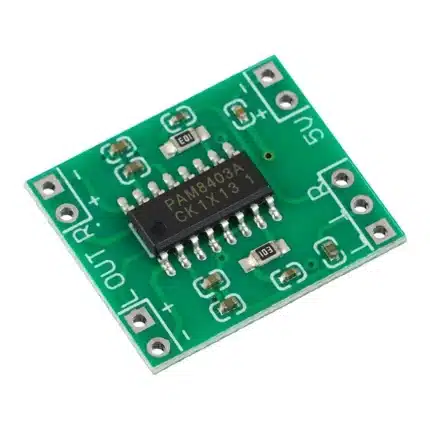
PAM8403 5V 2×3W Stereo Class-D Audio Amplifier Module
The PAM8403 5V 2×3W Stereo Amplifier Module is a compact and efficient Class-D audio amplifier capable of driving two 4Ω to 8Ω speakers. Ideal for DIY speakers, MP3 players, Bluetooth audio projects, portable electronics and embedded sound applications.
- 2×3W Stereo Output
- 5V Powered
- Class-D Efficiency
- Compact Design
Best For: Mini speakers, DIY audio, MP3 players and portable projects

SN74HC595N 8-Bit Shift Register IC (DIP-16) | Pin Expander
Turn 3 pins into 8. Running out of pins on your Arduino? The SN74HC595 Shift Register allows you to control 8 separate outputs (like LEDs or LCDs) using only 3 digital pins on your microcontroller. You can even daisy-chain them to control hundreds of outputs!
-
Function: Serial-In, Parallel-Out (SIPO).
-
Channels: 8 Outputs per chip.
-
Voltage: 2V - 6V DC.
-
Best For: LED Chasers, 7-Segment Displays, and LED Cube Projects.

Reviews
There are no reviews yet.