


MAX30102 Pulse Oximeter & Heart Rate Sensor Module (SpO2) – Arduino Compatible
₵50.00
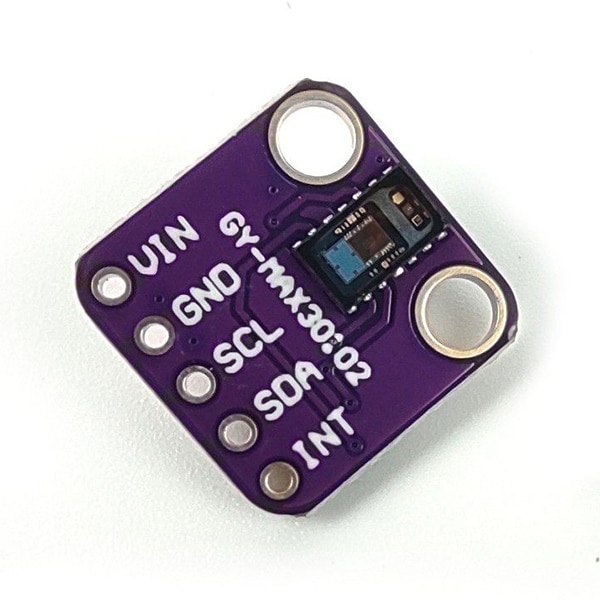
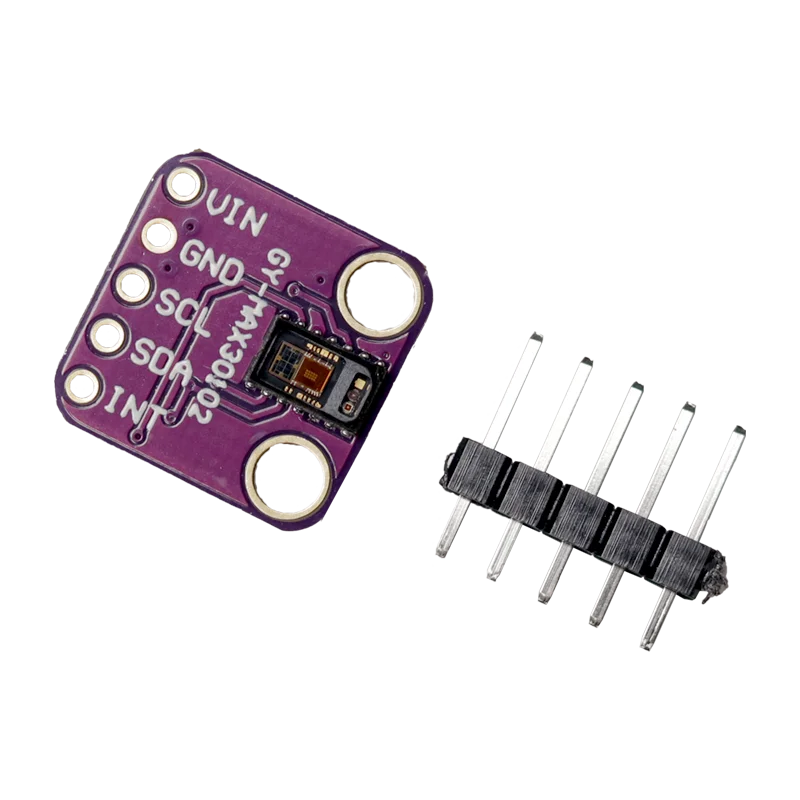
The MAX30102 is a high-precision integrated pulse oximetry (SpO2) and heart-rate monitor biosensor module, perfect for DIY health tracking and wearable IoT devices.
-
Sensor: MAX30102 (Upgraded from the older MAX30100)
-
Measurements: Heart Rate (BPM) & Blood Oxygen Saturation (SpO2)
-
Interface: I2C (Standard protocol)
-
Operating Voltage: 3.3V – 5V
-
Current: Ultra-low power consumption (ideal for battery wearables)
-
Application: Fitness trackers, medical monitoring projects, STEM research
9 in stock
The MAX30102 Pulse Oximeter and Heart Rate Sensor is an advanced optical biosensor module designed for biomedical projects, fitness trackers, and wearable IoT devices. It integrates two LEDs (Red and IR), a photodetector, optimized optics, and low-noise analog signal processing to detect pulse oximetry (SpO2) and heart rate signals with high precision.
Whether you are an engineering student in Ghana building a final-year health monitoring system or a hobbyist creating a smart wearable, this sensor provides professional-grade biometrics in a tiny, breadboard-friendly package.
Key Features:
-
Dual Biometrics: Measures both Heart Rate (BPM) and Blood Oxygen Saturation (SpO2) simultaneously.
-
Ambient Light Cancellation: Features an internal glass cover and algorithms to filter out external light interference, ensuring clean and accurate readings.
-
Ultra-Low Power: Designed for battery-powered wearables. It can drop into a near-zero standby current mode, preserving your battery life.
-
Standard Interface: Communicates via standard I2C, making it incredibly easy to connect to microcontrollers.
Technical Specifications:
-
Sensor Chip: Maxim MAX30102
-
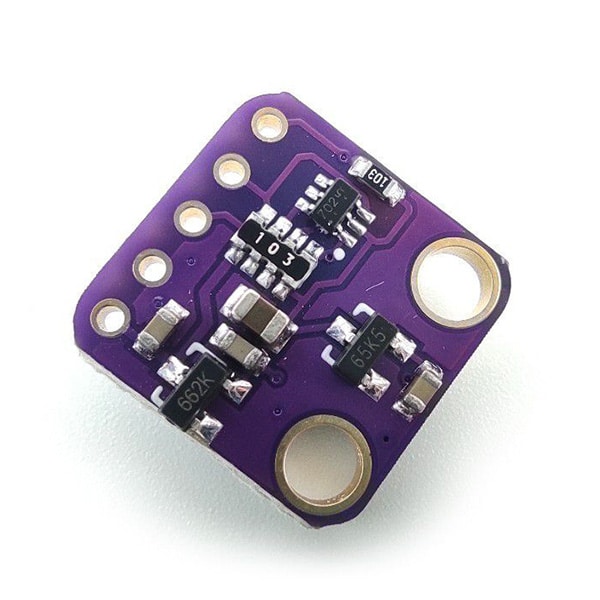
Operating Voltage: 3.3V to 5V DC (Module includes an onboard voltage regulator)
-
Communication Interface: I2C (Pins: SDA, SCL)
-
LED Wavelengths: 660nm (Red), 880nm (Infrared)
-
Dimensions: ~14mm x 14mm
👨🔧 Engineering Note: Why choose the MAX30102 over the MAX30100?
-
The Upgrade: If you have seen tutorials for the older MAX30100, you likely know it has known hardware bugs regarding its pull-up resistors when used with 5V boards. The MAX30102 solves these issues entirely and provides much cleaner, reliable PPG signals.
-
Wiring Tip: While the board accepts 5V power, the I2C logic lines are optimized for 3.3V. If using an Arduino Uno (5V), it usually works fine directly, but for best long-term stability, a logic level converter is recommended. For 3.3V boards like the ESP32 or NodeMCU, it is completely plug-and-play!
Typical Applications:
-
DIY Smartwatches and Fitness Bands
-
Patient Health Monitoring Systems (IoT)
-
Biomedical Engineering Research Projects
-
Sports and Exercise Tracking Devices
Related products

433MHz RF Transmitter & Receiver Kit | Wireless Module for Arduino
Cut the cord. Go wireless. This kit includes one Transmitter and one Receiver. It is the simplest and most affordable way to send data wirelessly between two Arduinos up to 100 meters (with antenna).
-
Frequency: 433MHz
-
Includes: 1x Transmitter (Square), 1x Receiver (Rectangle)
-
Modulation: ASK (Amplitude Shift Keying)
-
Best For: Remote control cars, weather stations, and wireless switches.

Flame Sensor Module (YG1006) | Infrared Fire Detector for Arduino
Give your robot the ability to see fire. This sensor detects the specific infrared light wavelengths (760nm - 1100nm) emitted by flames. It is the essential "eye" for Fire Fighting Robots and home fire alarm projects.
-
Sensor Type: YG1006 NPN Phototransistor (High Speed).
-
Detection Range: Up to 1 meter (depending on flame size).
-
Spectrum: 760nm - 1100nm (Invisible IR light).
-
Best For: Fire Fighting Robots, Smart Kitchen Alarms, and Safety Systems.

High Sensitivity Vibration Sensor Module (SW-1801P) | Shock & Shake Switch
Detect even the slightest tap. Unlike standard vibration sensors that require a hard shake, the SW-1801P High Sensitivity module can detect light knocks, impacts, and vibrations. Perfect for anti-theft alarms and "Smart Wake-Up" devices.
-
Sensor Type: SW-1801P (High Sensitivity Spring).
-
Output: Digital (High/Low).
-
Adjustable: Blue Potentiometer to set sensitivity trigger.
-
Best For: Anti-Theft Alarms, Earthquake Detection, and Smart Toys.

IR Infrared Obstacle Avoidance Sensor Module | FC-51 for Arduino
Teach your robot to see. This sensor emits infrared light and detects reflections to see if an object is in front of it. It is the essential component for building "Obstacle Avoiding Robots" and simple security alarms.
-
Detection Range: 2cm - 30cm (Adjustable).
-
Output: Digital Signal (LOW when obstacle detected).
-
Compatibility: Works directly with Arduino, ESP32, and Raspberry Pi.
-
Best For: Robot Cars, Smart Trash Cans, and Proximity Alarms.

MQ-2 Smoke & Gas Sensor Module | LPG, Butane, Hydrogen Detector
Build your own Fire & Gas Leak Alarm. The MQ-2 is a dual-purpose safety sensor. It detects Smoke (from fires) and Combustible Gases (like LPG, Propane, and Butane). It is the standard module for building "Smart Kitchen" safety monitors.
- Detects: Smoke, LPG, Propane, Hydrogen, Methane.
- Sensitivity: High (Adjustable).
- Response Time: < 10s.
- Best For: Fire Alarms, Gas Leak Detectors, and Industrial Safety.

MQ-3 Alcohol Sensor Module | Breathalyzer & Ethanol Detector
Build your own Breathalyzer. The MQ-3 is specifically designed to detect alcohol (Ethanol) vapors. It has high sensitivity and fast response time, making it the perfect sensor for "Smart Car" safety systems that prevent drunk driving.
-
Detects: Alcohol, Ethanol, Benzine.
-
Sensitivity: Adjustable via Blue Potentiometer.
-
Warm-up: Heater requires ~20 seconds.
-
Best For: Breathalyzers, Drunk Driving Alarms, and Industrial Monitoring.


Raindrop Sensor Module | Rain & Water Detector for Arduino
Build your own weather station. This sensor detects rain, snow, or water droplets. It consists of a large nickel-plated sensing board and a control module. When water hits the board, it sends a signal to your Arduino to close windows or sound an alarm.
-
Sensor Type: Resistive (Nickel-Plated Board).
-
Outputs: Digital (High/Low) and Analog (Rain Intensity).
-
Durability: Treated against oxidation for longer life.
-
Best For: Automatic Wipers, Smart Clotheslines, and Weather Stations.
Reviews
There are no reviews yet.